Resume Types & Formats
Reverse-Chronological Resume: Format, Examples and Template
Your latest job appears first. That sounds almost too obvious to matter. Yet this single ordering decision can make a career look like steady progress, unrelated movement, or a story the recruiter has to work too hard to understand.
A reverse-chronological resume lists your current or most recent position first, followed by earlier roles in descending date order. It is the most familiar structure for US employers and usually the strongest default when your recent experience supports the job you want next.
Familiar does not mean automatic. The format exposes dates, transitions, promotions, and gaps immediately. Used well, that transparency builds confidence. Used without strategy, it can bury your strongest evidence under routine duties.
What is a reverse-chronological resume?
The name describes the order, not the design. Each work entry begins with the most recent role and moves backward. Education, certifications, projects, and other dated sections normally follow the same newest-first logic.
This structure lets recruiters verify your current level quickly. They can see where you work, what you do now, how long you have done it, and whether earlier roles show relevant progression. Indeed’s chronological resume guidance likewise positions the format as a strong choice for candidates with consistent, relevant experience.
Who should use this resume format?
Choose a reverse-chronological resume when your recent work history is one of your strongest selling points. It works especially well for professionals seeking a similar role, an advancement within the same field, or a position where current technical knowledge matters.
It can also work for graduates. Internships, campus employment, research, volunteer work, and relevant projects can be ordered by date even when the applicant has not held a full-time professional role.
| Career situation | Recommended? | Reason |
|---|---|---|
| Steady experience in one field | Yes | Shows progression clearly |
| Applying for a promotion | Yes | Puts current scope first |
| Recent graduate | Often | Can organize internships and projects |
| Major career change | Maybe | A combination format may foreground transferable skills better |
| Long unexplained gap | Use carefully | Dates receive immediate attention |
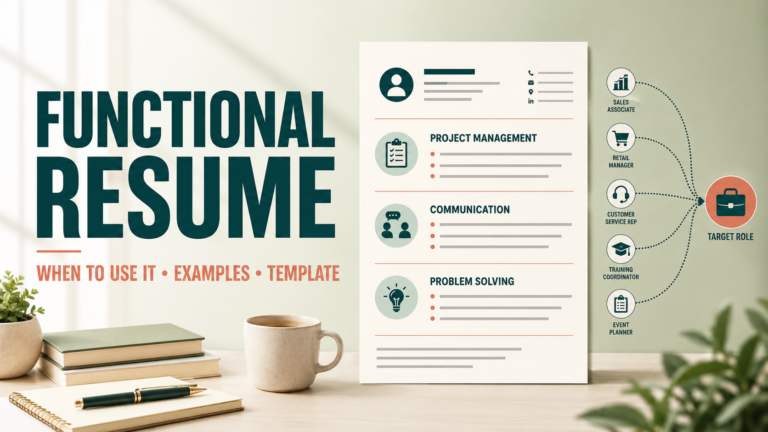
If your most relevant experience is older or comes from several unrelated roles, compare alternatives in our complete guide to seven resume types. A combination format may give transferable skills more visibility without hiding the timeline.
The correct reverse-chronological resume structure
Contact information
Name, phone, professional email, location, and a relevant portfolio or LinkedIn URL.
Professional summary
A targeted snapshot of experience, specialization, and one credible point of value.
Work experience
Most recent role first, with consistent dates and achievement-focused bullets.
Skills
Relevant tools, methods, certifications, and technical abilities supported by experience.
Education
Most recent degree first. Graduates may move this section higher when it is a key qualification.
Optional sections
Certifications, projects, publications, languages, or volunteer work when relevant.
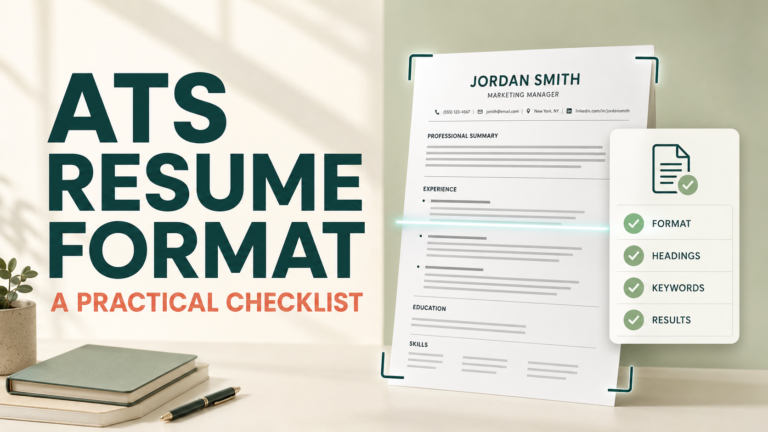
Use standard headings and selectable text. If online applications are a priority, continue with our ATS resume help resources. Harvard’s career center also recommends consistent formatting and listing information within sections in reverse-chronological order.
How to write the experience section
For each role, list the job title, employer, location when useful, and dates. Then select achievements that prove relevance to the target position. Your newest role usually receives the most detail because it carries the strongest signal about your present capabilities.
Do not give every job equal space. An eight-year-old position unrelated to the target role may need one or two bullets. A current role closely matching the vacancy may deserve four or five specific achievements.
Begin bullets with clear actions, add context, and quantify results when you have accurate numbers. Metrics can include revenue, time saved, volume, team size, quality, growth, cost reduction, completion rate, or customer outcomes. Never invent a number just because a quantified bullet looks stronger.
Before and after
Responsible for preparing weekly sales reports.
Better: Automated weekly sales reporting in Excel, cutting preparation time from five hours to two and giving regional managers next-day performance data.
Five mistakes that weaken the format
- Listing duties instead of evidence. A job description explains the role; achievements explain your value.
- Using inconsistent dates. Switching between years-only and month-year formats makes the timeline harder to follow.
- Including every position. Relevance matters more than documenting your entire working life.
- Burying promotions. Show title changes clearly under the employer so progression is visible.
- Using one version everywhere. Keep the format, but tailor the summary, skills, and strongest bullets to each vacancy.
Frequently asked questions
Is chronological the same as reverse chronological?
In most current resume guidance, “chronological resume” refers to a reverse-chronological structure: the newest position appears first and earlier roles follow. A true oldest-to-newest work history is rarely the best choice.
Is a reverse-chronological resume ATS-friendly?
It is generally a safe structure because the work timeline is clear and familiar. ATS compatibility still depends on readable text, standard headings, logical ordering, and the exported file.
How far back should work history go?
Include the history needed to prove relevant qualifications. Many private-sector resumes emphasize the most recent 10 to 15 years, but senior, specialized, academic, and regulated roles may require different depth.
Can I use this format with an employment gap?
Yes, especially when your recent experience remains relevant. Use accurate dates and address the gap briefly only when context helps. A combination format may work better when transferable skills need more emphasis.
Should education appear before experience?
Experienced professionals usually place work history first. Students and recent graduates may place education higher when their degree, coursework, academic projects, or campus experience are central to the application.
Editorial standard: This guide was reviewed against current resources from Indeed, Harvard’s Mignone Center for Career Success, and the University of Pennsylvania Career Services. Employer instructions should always take priority.