Functional Resume: When to Use It, Examples & Template
A functional resume can make a nontraditional career story easier to understand—but only when your skills are supported by credible evidence. Here is how to build one without making recruiters wonder what is missing.
Imagine that your strongest qualification was built across freelance projects, volunteer leadership, a return-to-work program and two roles with unrelated titles. A traditional employment timeline may force the reader to assemble the puzzle. A functional resume changes the order of the evidence: it begins with the capabilities the employer needs, then shows where and how you used them.
That does not mean deleting dates or disguising your history. The strongest skills-based resumes remain transparent. They simply give more space to relevant accomplishments and less space to job titles that do not tell the full story.
What Is a Functional Resume?
A functional resume—also called a skills-based resume—organizes its main content around relevant competency areas rather than presenting every achievement beneath a chronological list of employers. For example, a candidate moving from hospitality into project coordination might use sections such as Project Planning, Stakeholder Communication and Process Improvement.
Each skill section should contain proof: a challenge, an action and a measurable or observable outcome. A brief employment history still appears later in the document. This separates a legitimate functional resume from a document that appears to conceal information.
Relevant skills
The reader sees job-matched capabilities before the timeline.
Accomplishments
Bullets connect each skill to real work, projects or service.
Work history
Employers, titles and dates remain concise and transparent.
When Should You Use a Functional Resume?
Consider this format when your most relevant evidence is scattered across different parts of your background. It can work for career changers, returners after an extended break, military-to-civilian candidates, freelancers with project-based experience, and applicants whose transferable skills matter more than their previous titles.
It is not automatically the best choice for everyone with a gap. If you have a steady progression in the same field, a reverse-chronological resume usually communicates that progression faster. If both your timeline and transferable skills are persuasive, a combination resume may offer the best balance.
| Career situation | Best starting format | Reason |
|---|---|---|
| Consistent experience in one field | Reverse-chronological | Promotion and recency are already strong selling points. |
| Major career transition | Functional or combination | Transferable capabilities need context before unrelated titles. |
| Project, freelance or portfolio career | Functional or project-based | Relevant outcomes may span several clients and settings. |
| Both strong skills and relevant recent jobs | Combination | A skills summary adds focus without minimizing the timeline. |
The Correct Functional Resume Structure
- Contact information: name, location, phone, professional email and a relevant portfolio or LinkedIn URL.
- Targeted professional summary: two to four lines connecting your experience, target role and clearest value proposition.
- Core competencies: a compact list of hard skills, tools and domain knowledge reflected in the vacancy.
- Selected skill areas: two to four headings, each supported by two or three achievement bullets.
- Employment history: employer, title, location and accurate dates in a concise list.
- Education and credentials: relevant degrees, licenses, certifications or completed training.
The order can change when the role demands it. A recent certification may move above employment history; a designer may place a portfolio link near the summary. The governing rule is relevance—not novelty.
Is a Functional Resume ATS-Friendly?
It can be, but structure matters. Applicant tracking systems and human reviewers both benefit from familiar headings, simple formatting and keywords used in context. Avoid decorative skill meters, floating text boxes and graphics that carry essential information. Use standard labels such as “Professional Summary,” “Skills,” “Professional Experience” and “Education.”
Do not paste a keyword bank into the document. If the vacancy asks for stakeholder management, show where you used it and what happened. Harvard career guidance recommends basic formatting, explicit skills and job-description keywords in context; that is a better strategy than repetition without evidence.
Functional Resume Bullet Example
Suppose a retail supervisor wants to move into operations coordination. “Communication” is too broad to persuade anyone. The bullet needs to show the skill operating in a real situation.
Weak: Good communication and team management skills.
Stronger: Coordinated daily handoffs across a 14-person sales and inventory team, introducing a shift checklist that reduced missed replenishment tasks by 28% in three months.
The stronger version supplies scale, action and outcome. It could sit beneath a “Team Coordination” heading even though the candidate’s official title was Retail Supervisor. The claim remains verifiable and the transferable value becomes obvious.
Common Mistakes That Weaken the Format
- Removing dates entirely: this can create more suspicion than clarity.
- Listing soft skills without proof: demonstrate communication, leadership and adaptability through results.
- Using generic categories: headings should reflect the target job, not a universal template.
- Repeating the same evidence: each bullet should reveal a distinct capability or outcome.
- Ignoring the job description: a skills-first resume must still be tailored for each application.
Before choosing your layout, compare all major resume types. The best format is the one that makes your job-relevant evidence easiest to verify—not necessarily the one that looks most creative.
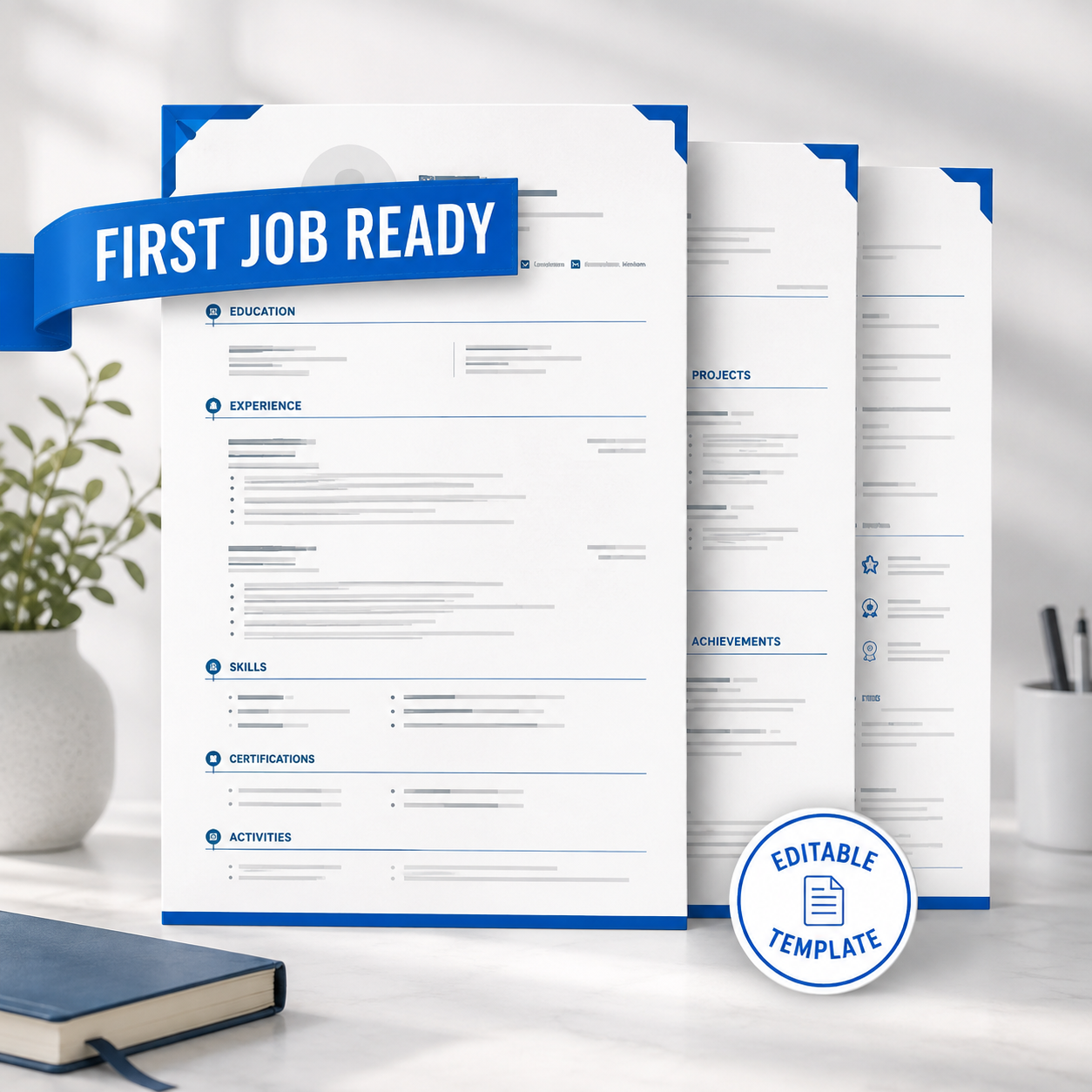
Start With a Polished, Editable Resume
Explore professional resume templates designed for clear hierarchy, fast customization and a confident first impression.
View Resume Templates on Etsy →Frequently Asked Questions
What is the main purpose of a functional resume?
Its purpose is to organize evidence around relevant skills and accomplishments when a job-by-job timeline does not communicate the candidate’s value clearly.
Do recruiters dislike functional resumes?
Some recruiters prefer a familiar chronological timeline, particularly for roles where progression and recent experience are central. A transparent employment section and evidence-rich skill bullets reduce ambiguity.
Should I use a functional resume for an employment gap?
Possibly, especially if your relevant abilities were developed through projects, caregiving-related activities, study, volunteering or earlier roles. Do not use the format solely to conceal dates.
How long should a functional resume be?
For many US applicants, one focused page is effective. Two pages can be appropriate when extensive relevant experience, technical projects or senior-level accomplishments genuinely require the space.
What is the difference between functional and combination resumes?
A functional resume gives the most space to skill categories. A combination resume opens with a strong skills or qualifications section but preserves a more detailed reverse-chronological employment history.