Resume Types & Formats
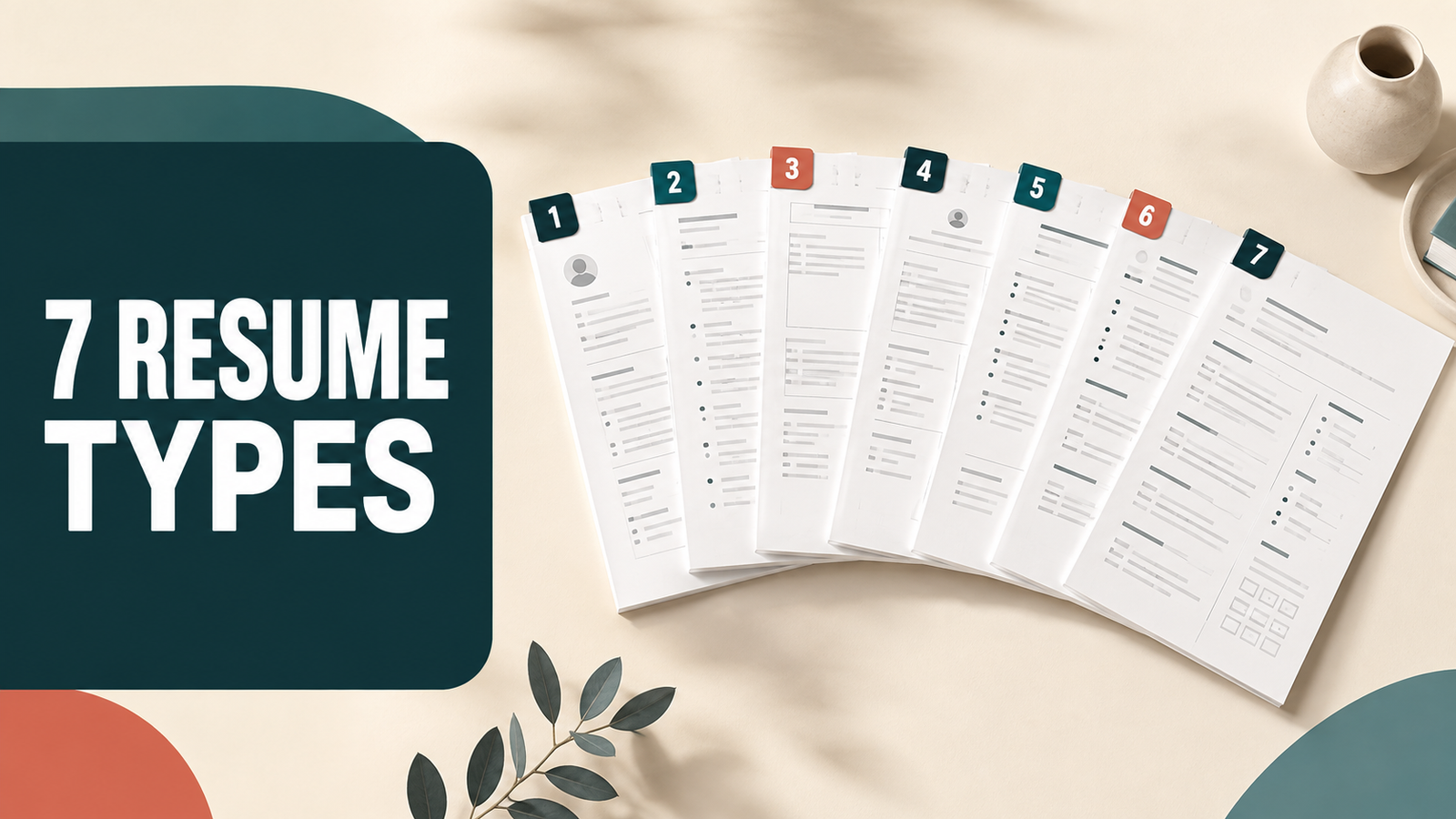
7 Resume Types: Which Format Fits Your Career?
A resume can contain the right experience and still make the wrong first impression. The problem is often not what you included. It is the order in which you made the recruiter find it.
Resume format determines what appears first, what receives the most space, and how clearly an applicant tracking system can follow your career history. A mid-career professional should not organize information like a graduate, career changer, or federal applicant.
The choice becomes easier when you ask which format makes your evidence easiest to verify. Below are seven resume types, the situations they fit, and their risks.
The format decision most applicants underestimate
The familiar three are chronological, functional, and combination. Indeed’s resume format guide uses these as the primary formats because each changes the emphasis placed on work history and skills.
“Resume type” can also describe a specific purpose. Targeted resumes adapt to one vacancy, infographic resumes act as visual supplements, and CVs and federal resumes follow specialized rules.
Reverse-chronological resume
Best default for most applicantsThis format lists your most recent position first and works backward. Recruiters can quickly see your current level, career progression, employers, dates, and recent achievements.
Choose it when: your recent experience is relevant, your history is reasonably consistent, or you want advancement in the same field. It is familiar and easy to scan when built with standard headings.
Watch for: unexplained gaps or frequent unrelated moves becoming immediately visible. Do not hide them with vague dates. Use a concise summary to connect your history to the role you want.
Functional resume
Use cautiouslyA functional resume places skill groups before the employment timeline. It may appeal to applicants with limited experience, long gaps, or a major career shift because it draws attention toward transferable abilities.
The risk is trust. When dates and employers are reduced too aggressively, the document can appear to avoid context. Application forms may still require a complete history. For most career changers, a combination format is more transparent.
Combination or hybrid resume
Strong for career transitionsThis format opens with relevant skills or accomplishments, followed by reverse-chronological history. It translates experience from one field into evidence for another without erasing the timeline.
Choose it when: you are changing industries, returning after a gap, or applying for a role where a specialized skill set matters more than your previous job title. Keep the skills section selective. A long wall of keywords weakens the advantage.
Targeted resume
Best for a specific vacancyA targeted resume is not a separate visual layout. It is a version of your chronological or combination resume tailored to one job. The professional title, summary, skills, and achievement bullets reflect the employer’s stated priorities.
Do not copy the job description. Match truthful terminology where your experience supports it, then prove those skills with outcomes. Review our resume types and formatting hub before adapting your base document.
Infographic resume
Portfolio supplement, not a safe defaultInfographic resumes use charts, icons, timelines, and visual skill ratings. They may demonstrate design ability in creative fields, but complex reading order and image-based text can cause accessibility and parsing problems.
Use one as a portfolio piece when the audience values visual communication. For online applications, keep a simpler ATS-conscious version. A “90% leadership” bar looks polished but offers no verifiable evidence.
Curriculum vitae
For academic and research careersA US academic CV is a detailed record of education, research, publications, presentations, teaching, grants, and professional service. It can extend beyond two pages because completeness matters more than brevity.
Do not send an academic CV to a typical private-sector role unless requested. Harvard career guidance distinguishes a concise resume from the credential-rich academic CV.
Federal resume
For USAJOBS applicationsA federal resume must align closely with the job announcement and include details not always found on a private-sector resume, such as month-and-year dates and, where relevant, hours worked per week.
Requirements have changed. OPM introduced a two-page standard for federal applications through USAJOBS, effective September 27, 2025. Follow the announcement and current OPM applicant guidance.
Seven resume types compared
| Resume type | Best for | Main advantage | Main risk |
|---|---|---|---|
| Chronological | Most professionals | Clear career progression | Highlights gaps |
| Functional | Skill-first presentation | Emphasizes abilities | Can appear evasive |
| Combination | Career changers | Balances skills and history | Can become lengthy |
| Targeted | One specific role | High relevance | Requires customization |
| Infographic | Creative portfolios | Visual impact | Parsing and accessibility |
| CV | Academia and research | Complete credentials | Wrong for many corporate roles |
| Federal | USAJOBS applicants | Matches federal requirements | Strict announcement rules |
Choose the format, then fix the evidence
A strong format cannot rescue generic content. “Responsible for customer service” reveals a duty. “Resolved 45+ weekly customer cases while maintaining a 94% satisfaction score” gives the recruiter scope and outcome.
Once the structure is settled, tailor the summary and strongest bullets to the vacancy. Keep standard headings, consistent dates, and readable typography. Then test the exported file by selecting and copying its text. If the reading order becomes scrambled, simplify the layout before applying.
Frequently asked questions
What resume type is best for most job seekers?
A reverse-chronological resume is the strongest default for most applicants because it presents recent experience and career progression in a familiar order. Use a combination format when relevant transferable skills need to appear before job history.
Which resume format is most ATS-friendly?
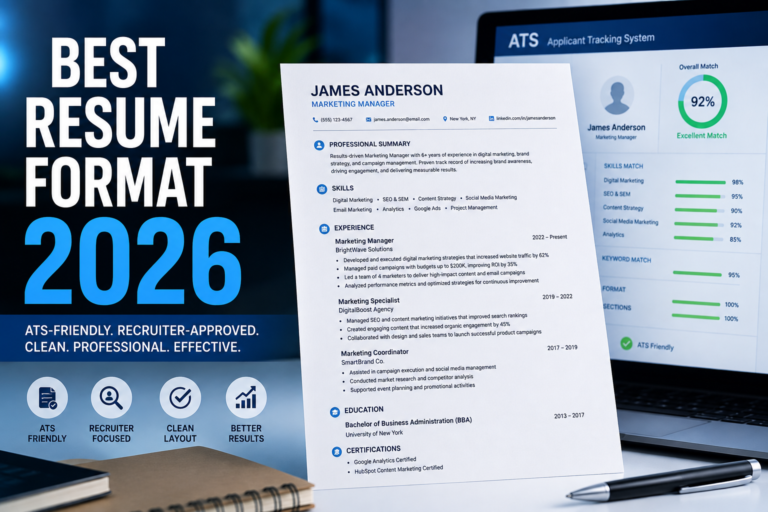
No format guarantees compatibility with every ATS. A simple reverse-chronological layout with standard headings, selectable text, consistent dates, and a logical reading order generally reduces parsing risk. Follow the employer’s requested file type.
Should a career changer use a functional resume?
Usually, a combination resume is more persuasive. It can foreground transferable skills while still providing a transparent employment timeline. A purely functional resume may leave recruiters searching for dates, employers, and proof of where skills were developed.
Is a CV the same as a resume?
Not in the United States. A resume is normally a concise, targeted summary for a job application. An academic CV provides a more complete record of research, publications, teaching, presentations, and other scholarly credentials.
Can I use different resume types for different jobs?
Yes. Keep a comprehensive master resume, then create targeted versions for individual roles. The base format may remain chronological or combination, while the summary, skills, and achievement bullets change to reflect each employer’s priorities.
Editorial standard: This guide was reviewed against current guidance from Indeed, Harvard’s Mignone Center for Career Success, and the US Office of Personnel Management. Employer instructions and application requirements should always take priority.